2013_May_16

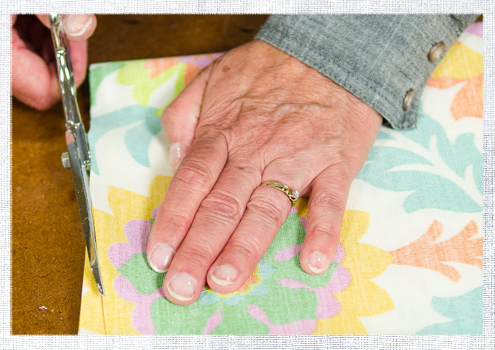
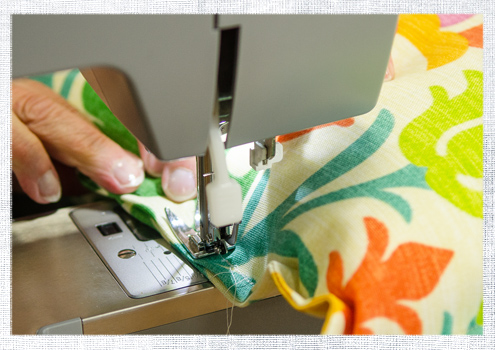
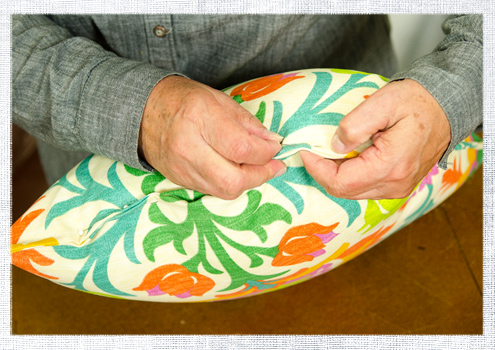
Weeding and thinning the garden is hard work, and all that kneeling on the ground can really hurt your knees. Give your knees a break this season with a comfortable and colorful knee pad that you can make yourself. It’s a quick and easy project and the result will become a useful part of your gardening equipment.

This kneeling cushion features elastic straps on one end of the pad that keep it securely rolled up for easy storage. When rolled, this pad will easily fit into a garden tote for convenient portability. The best part about creating your own kneeling pad is that you can customize it to best suit your needs and style. The fabric color and type, filling, and overall size of the knee pad can all be tailored to your needs and comfort.

We’ve created a new video to show you step-by step how to sew, fill, and finish your own roll up knee pad. In the video, we use Sunbrella Marine Grade Fabric in Sunflower Yellow for the body of the pad, but other heavy, durable fabrics like Picasso Cotton Duck will also work great. To fill the inside of the pad, we chose to use flaxseed, but you can also use buckwheat hulls, or rice. Customize the size of your cushion either by choosing between three given sizes or creating your own dimensions.


Materials Needed:

Supplies for this project and many more are available at www.sailrite.com

Do you have big plans for your garden this year? What are you planting? Share your garden plans and ideas with us in the comments!

If you’re building a sail, tarp, boat awning, or flag, you’ll probably find yourself in need of grommets or eyelets. Both are used to strengthen holes in fabric, so what’s the difference? This is a common question and we’re going to take a look at what sets these two useful pieces of hardware apart.

2013_May_2

Spur Grommet

Let’s start with grommets. A grommet is a two-part piece of hardware that is pressed together through a pre-punched hole in a piece of fabric. A quality grommet is normally made from brass or stainless steel. These malleable metals will flare and roll when the grommet is installed to lock the two parts together, sealing the fabric in between. Grommets install quickly and easily, but do require the use of a special setting die. For an extra strong hold, choose the spur grommet. This grommet has small teeth or “spurs” that bite into the fabric to keep the grommet from spinning and coming loose over time.

2013_May_3

Brass Ring and Eyelet

Up next are eyelets. They can be confusing because sometimes very small regular grommets are referred to as eyelets, like the holes your shoelaces go through. However, in the marine industry and beyond, generally an eyelet refers to a more specific style of hardware. An eyelet is one piece of a more traditional and time-consuming method of hole reinforcement. Eyelets are used in conjunction with brass rings. First, a brass ring must be hand-sewn over a pre-punched hole in the fabric with waxed twine. Then the eyelet, which is made of a soft brass, is pressed into the center of the ring and locked in place using a setting die. The eyelet protects the twine, which is the strength of the assembly.

Eyelets and grommets each have uses where they are best suited. In general, use a plain grommet for small projects like flags, awnings, or curtains. If you need to install a large number of grommets and each will have a relatively low load, go for the spur grommets. For higher loads or at the corners of large canvas pieces or sails, use an eyelet grommet.

Now you can select grommets and eyelets for all your projects like a pro! Grommets, eyelets, and setting dies are all available at www.sailrite.com.

Are you working on any new projects? Something with grommets? Tell us about it in the comments!

2013_May_1

Kitchens are often the center of our homes. With family coming and going, cooking, and eating meals, we spend a lot of time in our kitchens. If your kitchen starts to feel stale after awhile, you can quickly liven it back up with color and fresh accessories like fabric seat covers for your chairs. Making your own seat covers is an easy upgrade you can do yourself.

We’ve put together a step-by-step video to show you how to measure, pattern and create your own chair covers. Making your own chair covers allows you to create a perfect fit with a tailored look by patterning right on your chair. After you make one cushion, create a permanent pattern to easily create more covers for whole your whole dining set.

Our chairs have a smooth rounded look with piping trim, but covers can easily be customized to suit your style. For example, make the cushion more angular and skip the piping for a more modern look. As an added feature, we included a Velcro closure at the back of the cover. This makes removing the cushions for laundering effortless. You can also swap out the cushions seasonally for a rotating style.
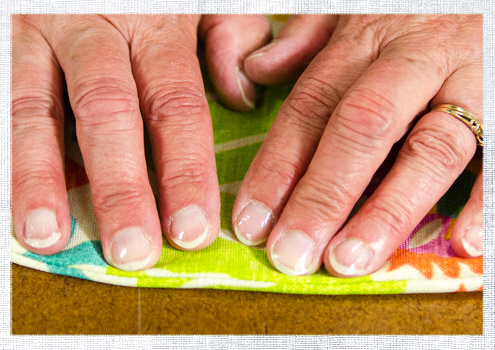
If your chairs could use some extra padding, add a layer of Nu-Foam densified polyester batting between the chair and the cover. Instructions for patterning and cutting the foam are included in the video.


Materials Needed:

All of these materials and more can be found a www.sailrite.com.

Do you change things around your home seasonally for a fresh feeling?

2013_April_2

Home sewing machines are great for most home sewing projects, but what about when you want to hem your jeans, make a leather handbag, or reupholster a sofa? For these more heavy-duty projects, you might find that your home machine is not up to the challenge. If you’re in the market for a heavy-duty machine, take a look at the Sailrite Ultrafeed.

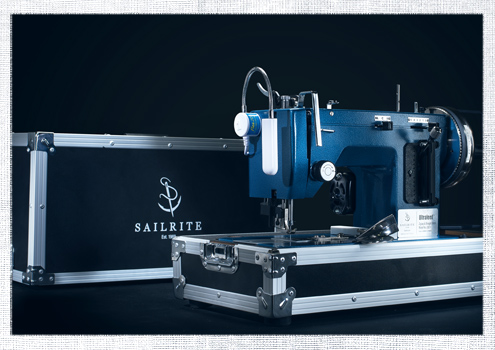
The Ultrafeed LS-1 and LSZ-1 Sewing Machines offer the best of both worlds combining the sewing power of an industrial sewing machine with the portability of a home sewing machine. The LS-1 is a straight stitch machine, while the LSZ-1 offers both straight and zigzag stitch options.

Double the Power

The Ultrafeed has the power you need to sew through thick assemblies. It can sew through up to 10 layers of heavy canvas in a straight stitch. A standard feature of the Ultrafeed is the Power Plus Wheel. This balance wheel is twice the size of a home machine wheel and provides twice the power even when sewing at slow speeds. With a 3/8” high foot lift and best-in-class needle bar stroke, you can sew virtually anything you can squeeze underneath.

Sew it All

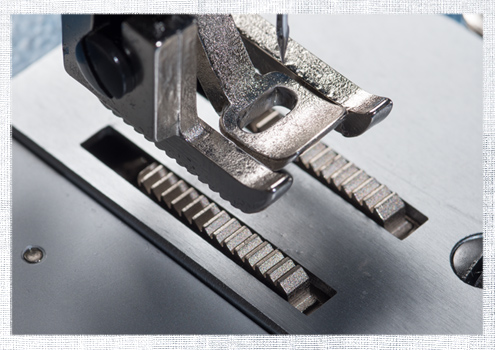
The Ultrafeed can handle a wide range of materials with ease including: denim, leather, canvas, fleece, flannel, faux fur, and upholstery fabric. Another great feature of the Ultrafeed is the mechanical walking presser foot. This foot pulls multiple layers of fabric (even sticky materials!) evenly through the machine for easy sewing and symmetrical stitch lengths.

Easy to Use

So it has the power required, but will it be too much of a beast? The Ultrafeed is very intuitive to use, making for a smooth transition from your home machine. It is easy to set up and operate, although it will be a bit louder than a home machine. A nice bonus feature is that the Ultrafeed’s presser foot comes with a built-in welting tunnel, which means you’ll have to change the foot less often for creating piping or installing zippers.

Top Notch Support

Every Ultrafeed Sewing Machine comes with excellent instructional materials and support. Included with the machine are interactive instructional DVDs as well as a full-color guidebook with parts listings and a full schematic to the machine. For additional information, there are streaming videos on the Sailrite website that demonstrate how to use the machines as well as how to install and use available upgrades. If you need extra assistance or want to talk to a live person, call Sailrite toll-free for tech support.

Ultrafeed Sewing Machines are bridging the gap between industrial and home sewing. They are built from the most reliable parts so they’ll last a lifetime. To see the specs and learn more about the Ultrafeed, visit www.sailrite.com.

Home sewers: what do you look for in a sewing machine?

2013_April_1

Spline Cord Style Sling Chairs by Denise C.

A popular choice for outdoor seating, sling chairs are comfortable, breathable, and, best of all, low maintenance. Even if the fabric wears out, replacing it is an easy DIY project. We’ve got easy to follow instructions for replacing the fabric that will keep your sling chairs looking great season after season.

Phifertex Plus Mesh and Sunbrella Sling make excellent fabric replacements for sling chairs. These fabrics were designed with sling applications in mind. They are sturdy, clean easily, and come in a variety of stylish patterns and colors.

To replace the fabric in your sling chair, first take a look at the construction and how the fabric attaches to the frame. There are two common types of sling chair configurations. The first utilizes a spline cord to attach the fabric to the chair. On this style chair, the fabric feeds into a slit in the metal support. The second configuration is an envelope style. For this style, the fabric acts as a pocket, and the support poles are housed inside the fabric. To identify the envelope style, look for bolts on the back of the chair that appear to be coming out of the fabric.

If you have a spline cord style chair, head on over to this post for full video instructions on replacing the fabric. If you have an envelope style chair, we’ve got you covered with video instructions right here.


How to Replace Sling Chair Fabric: Envelope Style

  1. Take measurements on the chair
  2. Disassemble the chair
  3. Measure the fabric off the chair, too
  4. Pattern the fabric
  5. Sew cover
  6. Add binding
  7. Reassemble the chair

Now you’re all set to make your sling chairs sturdy and beautiful again. Check out our selection of slingable fabrics at www.sailrite.com.

What’s your favorite type of seating on your patio? Do you love the ease of sling chairs or do you prefer a cushioned bench?

Thinking about making a new dodger? Or maybe putting a window in your sweeping mainsail? Those projects and many more require the use of a clear vinyl window material. With all the different brands and gauges, it can be hard to tell which material will best suit your project. Our Window Material Buying Guide can help (we shared that here), but for a little extra assistance we’re going to explain some window material terms and provide more in-depth explanation.

Window material has it’s own unique set of buzz words. Here are a few to be on the look-out for when making your selection.

4 Window Material Terms to Know:

Pressed & Polished: This refers to a common method of manufacturing clear vinyl. Pressed and polished goods are made by taking two layers of material and pressing them together between highly polished chrome plates. This creates one, thicker polished sheet. This method produces the most optically clear and consistent clear vinyl. They often come in sheets of 54” x 110”. Pressed and polished brands include: Strataglass, O’Sea, Crystal Clear, and Regalite.

Gauge: The gauge of window material refers to the thickness. A 20-gauge material is 0.020” thick; a 30-gauge piece is 0.030” and so on. Gauge can also be a measure of flexibility. Typically, the thicker the gauge the less flexible the window material will be.

Optical Clarity: The optical clarity of a window material tells how easy it is to see through. Generally speaking, the more expensive, pressed and polished goods have a higher optical clarity. Optical clarity is also linked to gauge. The thicker the gauge, the better the clarity.

Scratch Resistance: Clear vinyl is inherently a little prone to scratches. Some window materials however, come pre-treated with a scratch resistant coating. This coating is valuable for the longevity of your window material. To minimize the risk for scratches, keep your vinyl windows as clean as possible.

Now that you’ve got all the terms down, it’s time to see how they relate.  In this video Matt Grant, Sailrite Vice-President, explains the differences between the window materials we carry and some of the preferred uses of each. Take a look.
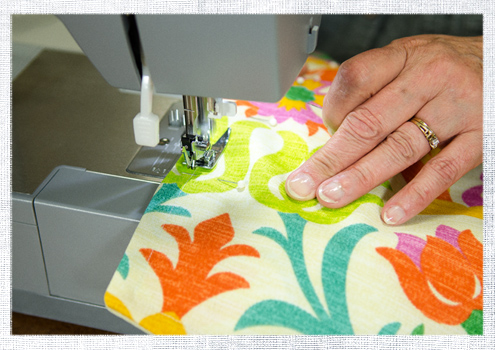


Use your new terms and knowledge to select the perfect window material for your next project. All the materials discussed are available at http://www.sailrite.com.
What is most important to you when choosing a vinyl window material? Leave a comment and tell us about it.

Retractable-Awning-headerImageAwnings are a great way to create a comfortable outdoor living space in the summer. Over the last few years, retractable awnings have become an increasingly popular way to shade and protect a deck or patio area. Depending on the quality of retractable awning, the awning fabric may start to fade or look a little shabby. Luckily, replacing awning fabric is fairly easy and a great project you can do yourself!

We’ve put together an instructional video that walks you step-by-step through the process of replacing the fabric panel in a retractable awning. You will learn how to remove the old fabric panel, take measurements, and sew and install a new fabric panel.

For the awning in this video, we used a sleek and sophisticated Sunbrella Awning stripe, Westfield Mushroom. We stock a wide selection of Sunbrella Marine and Awning Fabrics, so you can select the fabric that will best suit your application.


How to Replace Retractable Awning Fabric in 8 Steps:

  1. Remove old fabric.
  2. Measure and cut new fabric (we recommend Sunbrella).
  3. Sew panels together.
  4. Hem all awning edges.
  5. Measure and cut a valance.
  6. Add a cording sleeve.
  7. Attach binding to valance.
  8. Re-install the awning fabric.

It’s as simple as that…and all the materials can be found at www.sailrite.com.

Do you have a retractable awning or do you have another way to stay shaded?

Follow

Get every new post delivered to your Inbox.

Join 376 other followers

%d bloggers like this: